The 15-second version
- Dermatologists advise washing as often as your hair gets oily or dirty: daily for a straight, oily scalp, and at least every 2 to 3 weeks for dry, curly, textured or thick hair.1
- Shampoo goes on the scalp, conditioner goes on the lengths, and a wide-tooth comb is the gentlest tool for wet hair.1
- In a 2016 study, nine men who had a four-minute scalp massage every day for 24 weeks had thicker hair.2
- Loose styles, lower heat and less pulling are the first habits to change.3,4
- A new habit takes weeks to settle in, so start with one change at a time.5
Why the scalp deserves its own routine
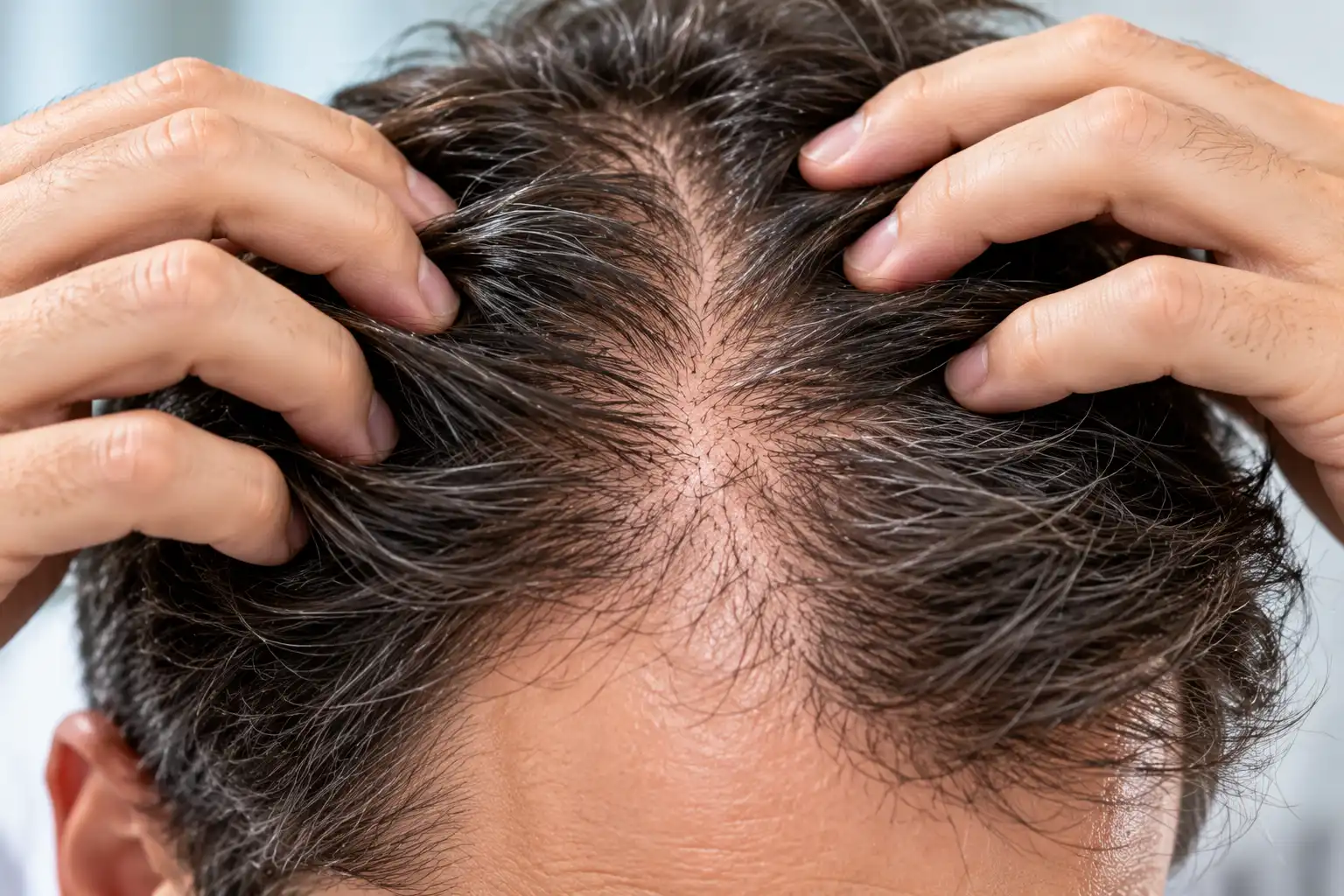
Your hair grows from follicles in the skin of your scalp, so scalp care and hair care are one routine. Shampoo applied to the scalp cleanses and washes away built-up products, dead skin and excess oil, while keeping the lengths from drying out.1
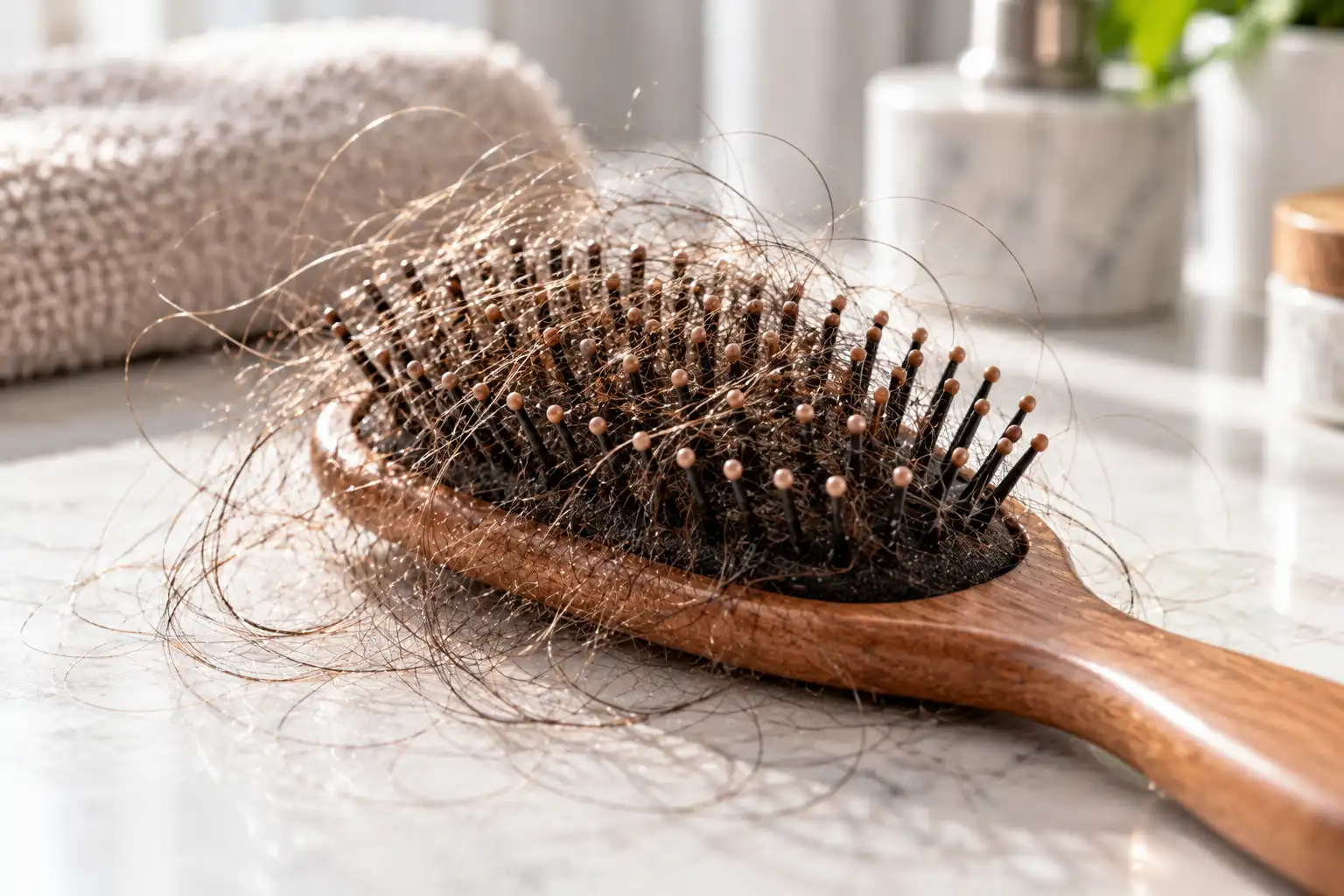
Regular washing matters for comfort as well as looks. A dermatologist quoted by the American Academy of Dermatology explains that washing with shampoo and water removes the dead skin cells, oil and microorganisms that build up and can cause dandruff.6
Flaking is common. The Canadian Dermatology Association estimates that about 50% of North Americans have dandruff, and notes that symptoms tend to worsen in dry winter air and may ease in summer.7 Dermatologists point to not shampooing often enough, or not using the right conditioner, oil or scalp moisturizer for your hair type, as common reasons for flakes.1
How often to wash
There is no single schedule. The American Academy of Dermatology advises washing based on how often your hair gets dirty or oily.1 This table gives starting points by hair and scalp type.
| Hair and scalp | How often to wash | Good to know |
|---|---|---|
| Straight hair with an oily scalp | Every day, if you like1 | Daily shampoo is a good fit for this hair type |
| Dry, textured, curly or thick hair | When needed, and at least once every 2 to 3 weeks1 | Apply conditioner to the full length of dry or curly hair1 |
| Fine or straight hair with dandruff | Daily or every other day, with dandruff shampoo twice a week8 | Fine or straight hair does well with frequent washing |
| Coarse, curly or coily hair with dandruff | When needed, with dandruff shampoo about once a week8 | Apply dandruff shampoo to the scalp only, since the ingredients can dry hair8 |
| Mild dandruff, any hair type | Shampoo 2 to 3 times a week, or daily, depending on hair type7 | Shampooing more often is probably the most important step in controlling dandruff7 |
Dry shampoo can bridge a day or two. Dermatologists advise washing with regular shampoo and water after one or two dry shampoos, because dry shampoo left on the hair or scalp can cause breakage and shedding.6
Your scalp will tell you if the schedule needs a change. Oily roots, itching or flakes can mean it is time to wash more often.17
How to wash well
Technique matters as much as frequency, and the steps are simple.
- Apply shampoo to your scalp. Cleansing there removes built-up products, dead skin and excess oil, and the lengths stay softer.1
- Rinse well, then apply conditioner. If your hair is fine or straight, apply it to the ends. If your hair is dry or curly, apply it to the full length.1
- Be gentle with wet hair, which is delicate. Detangle with a wide-tooth comb. For thick, curly hair, comb in the shower before rinsing out the conditioner. For straight hair, let it dry a bit first, and work from the ends upward.1
- Dry gently. Wrap your hair in a towel or t-shirt to absorb moisture, because roughly rubbing it dry can cause damage.1
Scalp massage
Scalp massage is one of the easiest habits to add. In a 2016 study, nine healthy men aged 25 to 46 had a standardized four-minute scalp massage every day for 24 weeks, and their hair thickness increased from 0.085 mm to 0.092 mm.2 The researchers attributed the change to stretching forces on the cells at the base of the follicle.2
A 2019 survey added real-world results. Of 327 people with pattern hair loss who tried standardized scalp massages, 68.9% reported that their hair loss had stabilized or regrown. The median effort was 11 to 20 minutes a day, and people had kept at it for 7.4 months on average.9 The 2016 study measured hair thickness in nine men, and the 2019 survey recorded self-reported results, so both are early evidence that points the same way.
How to do it
- Use the pads of your fingertips and keep your nails off the scalp.
- Press firmly enough to move the scalp over the bone, then make slow circles. Work from the sides and front toward the crown.
- Aim for about four minutes a day, the length used in the 2016 study.2
- Pair it with something you already do every day, such as the minutes while conditioner sits in the shower.
- Stop if your scalp feels sore or irritated.
Styling habits to change
Small changes to how you style protect the scalp and the hair. These draw on the American Academy of Dermatology’s list of habits that can damage hair.3
Ease off the tension
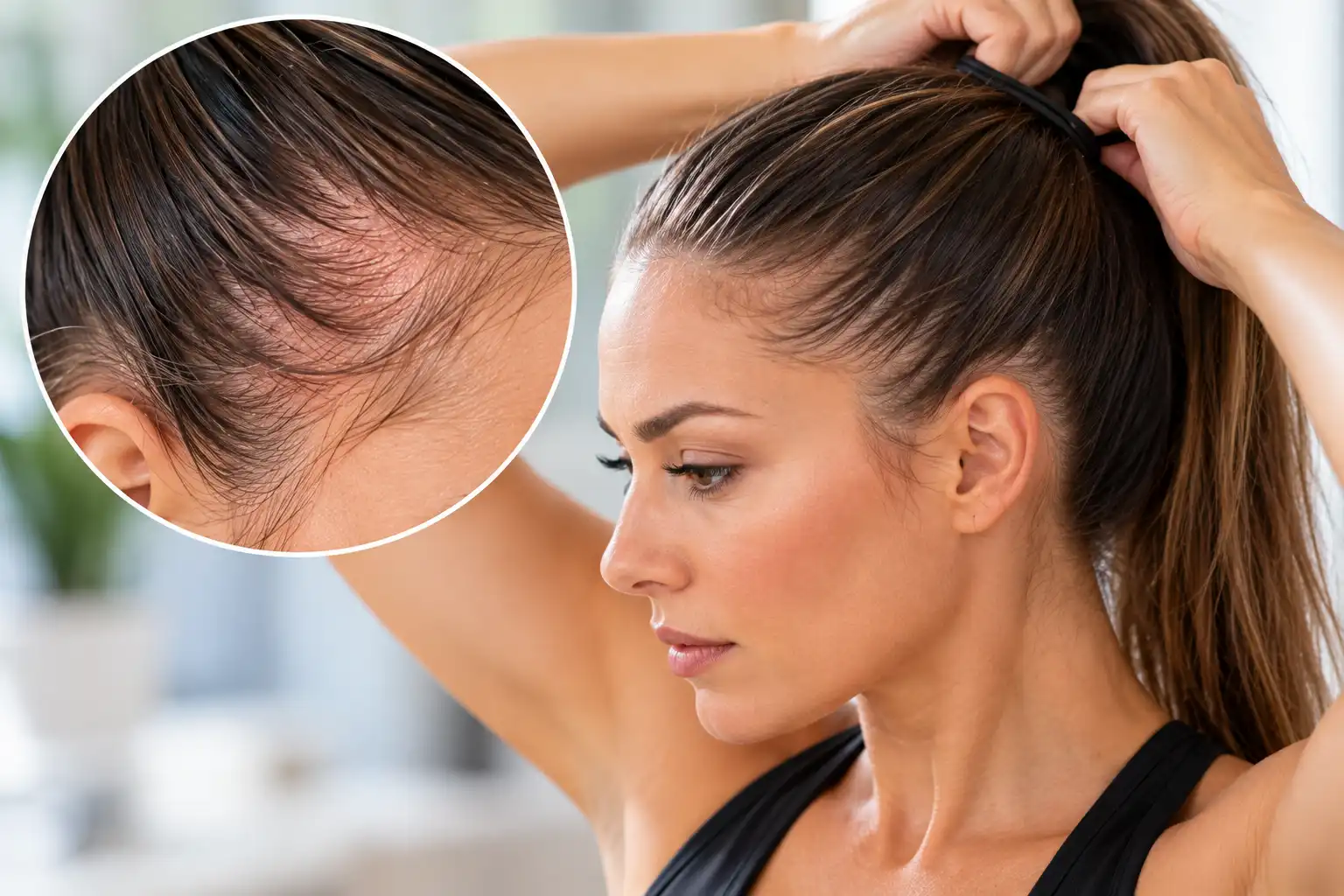
Tight ponytails, buns, cornrows, weaves and extensions pull on follicles. Dermatologists advise wearing hair loosely pulled back, using covered rubber bands made for hair, and trying a hairstyle that does not pull.3 Repeated tension can cause traction alopecia, which is reversible when caught early. If the tension continues for years, the damage can become permanent.4
Turn the heat down
Let hair air dry when you can, use the lowest heat setting, and limit the time a hot comb or curling iron touches your hair.3 If you do style with heat, use low or medium settings and a product that protects hair from heat.1
Handle wet hair gently
Hair is fragile when wet. If your hair is straight, let it dry a bit and then comb it gently with a wide-tooth comb. If your hair is textured or tightly curled, comb it while it is damp with a wide-tooth comb.3
Skip the 100 strokes
Hair never needs 100 brush strokes a day. Brush and comb only to style, use a wide-tooth comb, and avoid pulling and tugging as you style.3
Watch long-hold products
The American Academy of Dermatology also lists styling products with long-lasting hold among habits that can damage hair.3 Wash them out on your regular wash days so they do not build up on the scalp.
Common scalp problems and when to see a doctor
Most scalp discomfort is mild and settles with a better routine. Dandruff is the most common.
The Canadian Dermatology Association says shampooing more often is probably the most important step in controlling dandruff, because an oily scalp lets dead skin cells accumulate and shed unevenly.7 If regular washing does not settle it, over-the-counter dandruff shampoos contain ingredients such as zinc pyrithione, selenium sulphide, ketoconazole, salicylic acid or coal tar, and rotating products can help you find what works.78 Zinc pyrithione is the milder choice and dries hair less.7
If you have coarse or naturally curly or coily hair, apply dandruff shampoo to the scalp only, about once a week, because the ingredients can dry hair.8
See a dermatologist if an itchy scalp persists for several weeks despite a dandruff shampoo, or if you notice redness and swelling. You may need prescription-strength treatment.7 A dermatologist can also tell whether flaking comes from seborrheic dermatitis, psoriasis, a fungal infection or eczema.8
For sudden shedding, patchy bald spots or hair loss with scalp pain, see our guide to why hair thins.
A routine that lasts
A routine sticks when it is easy to repeat in the same setting. In a study of 96 volunteers who repeated a daily behaviour in the same setting for 12 weeks, the time to reach automaticity ranged from 18 to 254 days, with a median of 66 days. Missing a single day did not materially affect the process.5 Plan for weeks rather than days, and treat an occasional miss as part of the process.
Tie each new habit to something you already do. Massage while your conditioner sits, and comb in the shower. Add one change at a time, and give each a few weeks before the next.
| Habit | How | Why it helps |
|---|---|---|
| Wash | Based on how oily or dirty your hair gets, shampoo on the scalp1 | Removes built-up products, dead skin and oil |
| Condition | Ends for fine or straight hair, full length for dry or curly hair1 | Moisturizes and detangles |
| Massage | About four minutes a day, with your fingertips2 | Hair thickness increased in the 2016 study |
| Detangle | Wide-tooth comb, gently, on wet or damp hair3 | Hair is fragile when wet |
| Dry | Wrap in a towel or t-shirt, and air dry when you can13 | Less friction and less heat |
| Style | Loosely pulled back, lowest heat setting3 | Less tension and less heat on hair |
If you would like a simple starting point, HUSSSH Hair Therapy Shampoo and Conditioner are sulphate-free cosmetics made with plant oils and extracts for thicker, fuller-looking hair. None of the research in this article tested them.
Start this week
- Check how your scalp feels today, and pick a wash schedule from the table
- Put shampoo on your scalp and conditioner on the lengths
- Add a four-minute scalp massage to a moment you already have each day
- Swap one tight hairstyle for a looser one
- Lower your heat setting one notch, or let your hair air dry once
- Take a photo of your part today so you can compare in a month
Frequently asked questions about scalp care
The American Academy of Dermatology advises washing based on how often your hair gets dirty or oily. A straight, oily scalp may want a daily shampoo, and dry, textured, curly or thick hair can be washed when needed, at least once every 2 to 3 weeks.1
Dermatologists advise washing with regular shampoo and water after one or two dry shampoos.6
Shampooing more often is probably the most important step. If that is not enough, an over-the-counter dandruff shampoo with zinc pyrithione, selenium sulphide, ketoconazole, salicylic acid or coal tar can help, and rotating products can help too.78 See a dermatologist if itching persists for several weeks.7
In one study, the time to reach automaticity ranged from 18 to 254 days, with a median of 66 days, and missing a single day did not materially affect the process.5
References
- American Academy of Dermatology Association. Tips for healthy hair. aad.org ↩
- Koyama T, Kobayashi K, Hama T, Murakami K, Ogawa R. Standardized scalp massage results in increased hair thickness by inducing stretching forces to dermal papilla cells in the subcutaneous tissue. Eplasty. 2016;16:e8. PMC ↩
- American Academy of Dermatology Association. 10 hair care habits that can damage your hair. aad.org ↩
- Billero V, Miteva M. Traction alopecia: the root of the problem. Clin Cosmet Investig Dermatol. 2018;11:149-159. PubMed ↩
- Lally P, van Jaarsveld CHM, Potts HWW, Wardle J. How are habits formed: modelling habit formation in the real world. Eur J Soc Psychol. 2010;40(6):998-1009. doi:10.1002/ejsp.674 ↩
- American Academy of Dermatology Association. Dry shampoo: dermatologists’ tips for getting your best results. aad.org ↩
- Canadian Dermatology Association. Dandruff. dermatology.ca ↩
- American Academy of Dermatology Association. How to treat dandruff. aad.org ↩
- English RS Jr, Barazesh JM. Self-assessments of standardized scalp massages for androgenic alopecia: survey results. Dermatol Ther (Heidelb). 2019;9(1):167-178. doi:10.1007/s13555-019-0281-6 ↩
This article is for general information only and is not medical advice. Talk to your doctor or a dermatologist about scalp or hair concerns. HUSSSH® Hair Therapy products are cosmetics. They are not intended to diagnose, treat, cure or prevent any disease, including hair loss. HUSSSH Hair Therapy Shampoo and Conditioner are mentioned in the routine section. None of the research in this article tested them, and we don’t claim they treat hair loss.
 Proudly Canadian owned and operated. Buy Canadian!